
Why Italy Belongs on Your Bucket List: Group Tours, River Cruises, and the Best Time to Go
Italy is one of the rare places that can make a single day feel full before lunch. You can stand inside a church that took centuries to build, eat pasta that tastes nothing like the version back home, walk through a hill town at sunset, and still have time to share a bottle of wine with people you only met that morning.
That is why Italy is not just a vacation idea. It is a life-list destination.
The country rewards curiosity at every turn. Rome brings ancient power into plain view. Florence makes art feel close enough to touch. Venice turns transportation into theater. Tuscany slows everything down with vineyards, cypress roads, and stone villages. The Amalfi Coast seems designed to make you stop mid-sentence.
Still, the way you travel through Italy matters. A rushed, poorly planned trip can turn the experience into a blur of train schedules, museum lines, and restaurant guesses. A well-planned group tour or river cruise can do the opposite. It gives the trip rhythm, access, and ease, while still leaving room for awe.
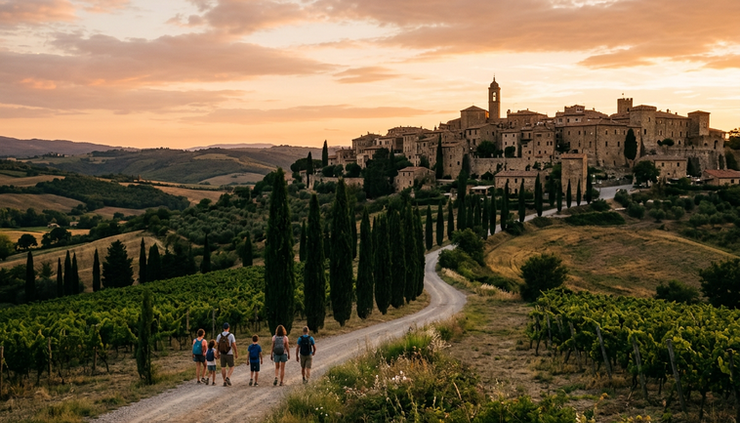
Italy delivers scenery, history, culture, and food in one trip
Some destinations are known for one great thing. Italy is known for many, and they fit together beautifully.
The scenery changes constantly. One day might bring the soft hills of Tuscany, lined with vineyards and olive groves. Another might bring the dramatic cliffs of the Amalfi Coast, where towns seem to cling to the rock above the sea. In the north, the lakes and mountains feel calm and grand. In Venice, water replaces roads, and even an ordinary arrival by boat feels memorable.
The history is just as rich. In Rome, ancient ruins sit beside modern streets. The Colosseum, Roman Forum, and Pantheon are not hidden away in remote sites. They are part of daily life. Florence holds the Renaissance in its churches, palaces, and museums. Pompeii gives a vivid look at a city frozen by disaster. Smaller towns add their own layers, from medieval walls to family-run workshops.
Then there is the culture. Italy has a way of making beauty feel practical. A hand-painted ceramic bowl, a neighborhood market, a carved church door, a perfectly pulled espresso, all of it carries care and tradition. It is not museum-only culture. It happens in piazzas, kitchens, gardens, and family tables.
Food ties the whole trip together. Italian cuisine is regional, which means the best meal in one place may be completely different from the best meal somewhere else.
In Italy, food is not just fuel between sights. It is often the sight.
A good trip might include:
Fresh pasta in Bologna or Tuscany
Seafood along the coast
Pizza in Naples
Truffles in season
Gelato during an evening walk
Local wine poured close to where the grapes were grown
A simple lunch that becomes one of the best memories of the trip
The best part is that Italy does not need to be “checked off” like a list of attractions. It is a place to experience with all five senses. That is why traveling with good company can make it even better.
A group tour brings ease, access, and great company
Italy is wonderful, but it can also be complex. Museum reservations, train connections, traffic zones, regional schedules, ferry times, and restaurant choices can take up more energy than expected. A well-run group tour removes much of that friction.
The strongest benefit is simple: someone else handles the logistics. Hotels, transfers, timed entries, local guides, and daily pacing are planned in advance. That leaves more energy for the actual experience.
Group travel also adds context. A guide can turn a pile of ancient stones into a story about power, politics, and daily life. A painting becomes more moving when someone explains why it changed art. A small-town festival makes more sense when you understand the local tradition behind it.
Then there is access. Many quality tours include experiences that are harder to arrange alone, such as:
Early or timed museum entry
Private tastings at wineries or farms
Cooking classes with local cooks
Guided walks through historic neighborhoods
Visits to smaller towns between major cities
Group meals in places chosen for quality, not convenience alone
That kind of curated itinerary matters in Italy because there is so much to see. Without a plan, it is easy to spend too much time in transit or too little time in the places that deserve a slower pace.
A tour can also offer strong value. That does not always mean the cheapest price. It means your money goes toward included experiences, expert guidance, transportation, hotels in useful locations, and less wasted time. For many travelers, that is the better deal.
The social side deserves attention too. Italy is a country made for shared moments. A long lunch tastes better when the table is lively. A wine tasting becomes more fun when people compare favorites. A sunset view feels richer when everyone goes quiet at the same time.
For solo travelers, couples, friends, and families, a group setting can add connection without requiring anyone to plan every detail. The right group tour in Italy gives structure by day and companionship by evening.

A river cruise offers a slower and smoother way to see Italy
A river boat cruise through Italy has a different rhythm from a traditional land tour. Instead of changing hotels every few nights, you unpack once and let the route carry you forward. That ease is a major part of the appeal.
Italy is not the same kind of river cruise destination as the Rhine or Danube, where long inland routes connect many countries. Italian river cruising often centers on the Po River region, Venice, the Venetian Lagoon, and nearby cultural stops. That can make the experience feel more intimate and focused.
The big benefit is pace. A river cruise lets the day unfold with less packing, fewer transfers, and more time to enjoy the route. Mornings might begin with coffee on deck. Afternoons may bring guided excursions. Evenings often return to the comfort of the ship.
This style of travel works especially well for people who want:
A more relaxed schedule
Included meals and excursions
Less luggage handling
Scenic arrivals by water
Smaller-scale travel than large ocean cruises
A balance of guided touring and downtime
A river cruise can also offer a strong sense of place. Traveling by water changes how you see Italy. Venice, in particular, is built for that feeling. Approaching neighborhoods, islands, and historic sites from the water gives the trip a natural flow.
The onboard experience adds its own value. Meals may highlight regional ingredients. Guides often prepare travelers for the next stop. Fellow passengers become familiar faces. The ship becomes a calm home base rather than just transportation.
For travelers deciding between a land-based group trip and a river cruise, the question often comes down to energy and priorities.
Choose a group tour if you want to cover more ground, visit several major cities, and enjoy a full schedule of cultural highlights.
Best for first-time visitors who want a broad overview of Rome, Florence, Venice, Tuscany, or the Amalfi Coast.
Choose a river cruise if you prefer unpacking once, moving at a gentler pace, and enjoying Italy from the water.
Best for travelers who value comfort, scenic travel, and a more relaxed base between excursions.
Both styles can be excellent. The best choice is the one that matches how you want to feel during the trip.

Peak season or off season depends on the trip you want
Italy is worth visiting year-round, but the timing changes the experience. Weather, crowds, prices, and local atmosphere all shift with the season.
For many travelers, the best overall time to visit is shoulder season, especially April, May, September, and October. These months often bring pleasant weather, active towns, open attractions, and fewer crowds than the height of summer. It is a strong choice for a first visit, especially if the itinerary includes walking tours, countryside drives, and outdoor dining.
Peak season, usually late spring through summer, has real advantages. The days are long, coastal areas feel lively, festivals and outdoor events are common, and nearly everything is open. If the Amalfi Coast, lake towns, or beach time are major priorities, peak season can make sense.
The tradeoff is crowding. Famous places like Rome, Florence, Venice, and the Amalfi Coast can feel packed, especially near major landmarks. Hotel prices are often higher, restaurant reservations matter more, and heat can make long sightseeing days tiring.
Off season, usually late fall through winter, brings a quieter version of Italy. Major cities can be especially rewarding during this time. Museums are calmer, local life is easier to see, and cooler weather makes walking comfortable. Winter also suits travelers more interested in art, food, history, and culture than beach time.
Some coastal towns and countryside properties may reduce hours or close for part of the winter, so off-season travel works best with a thoughtful itinerary. That is another place where a guided tour or cruise operator can help, since the schedule is planned around what is actually available.
Here is a simple way to think about timing:
Season | Best for | What to expect |
Spring | First-time trips, gardens, walking tours, Tuscany, cities | Mild weather, blooming countryside, popular sites getting busier |
Summer | Coastlines, long days, festivals, family schedules | Warm to hot weather, higher prices, larger crowds |
Fall | Wine regions, food, culture, comfortable touring | Harvest atmosphere, pleasant temperatures, strong overall value |
Winter | Museums, cities, holiday atmosphere, quieter travel | Fewer crowds, cooler weather, some seasonal closures |
If the goal is the best balance of comfort, value, and atmosphere, shoulder season is hard to beat. If the dream is sunny coastlines and long evenings, peak season may be worth it. If the goal is slower travel and fewer crowds, off season can be a gift.
Special access and expert planning can change the whole trip
Italy is full of famous places, but the most powerful memories often come from the details around them. A guide who points out a hidden symbol in a fresco. A family winery that explains how the land shapes the wine. A cooking class where the pasta is imperfect, funny, and delicious. A small church with no crowd, no line, and a painting that stops everyone.
This is where curated travel earns its place.
A well-designed trip does more than bundle transportation and hotel rooms. It shapes the days so they make sense. It avoids backtracking. It balances major sights with quieter moments. It leaves time for coffee, wandering, and sitting in a piazza without checking the clock every five minutes.
Special access does not always mean glamorous or exclusive. Sometimes it means entering at the right hour, meeting the right local expert, or visiting a place that independent travelers often miss. In Italy, those details can change the emotional weight of a trip.
They can also reduce decision fatigue. Italy offers endless choices. That sounds exciting until every meal, transfer, ticket, and route becomes another decision. Guided travel narrows the field in a helpful way. The best itineraries still leave room for personal discovery, but they remove the stress of building the entire trip from scratch.
That is especially useful in places like Tuscany, where public transportation may not easily reach smaller villages and wineries. It also helps in Venice, where arrival points, walking routes, and boat transfers can confuse first-time visitors. In Rome and Florence, timed museum reservations and knowledgeable guides can make the difference between seeing famous art and understanding why it matters.
A strong itinerary also protects your time. Most travelers do not have unlimited vacation days. If Italy is a once-in-a-lifetime trip, wasting half a day on preventable logistics feels painful. Group tours and cruises help keep the focus where it belongs, on the experience.

The best Italy trip feels planned but not crowded
A great Italy itinerary has contrast. It should include icons, but not only icons. It should include free time, but not so much that every day becomes a planning project. It should include good meals, but not require fancy dining every night. The magic is in the balance.
For a first trip, a strong route might combine a few of these experiences:
Rome for ancient history, piazzas, churches, and unforgettable streets
Florence for Renaissance art, architecture, and day trips into Tuscany
Venice for canals, islands, and a sense of place unlike anywhere else
Tuscany for wine, villages, farms, and slower countryside travel
The Amalfi Coast or Italian Lakes for scenery and rest
Bologna, Verona, or Siena for culture with a slightly calmer pace
Trying to see everything in one trip can weaken the experience. Italy is best enjoyed with enough time to absorb each place. Two nights in a city is often the minimum. Three can feel much better. A slower route also creates space for the unexpected, which is where Italy shines.
That could mean stepping into a quiet bakery because the smell pulls you inside. Watching local families gather in a square before dinner. Taking a wrong turn and finding a view better than the one in the guidebook. Sharing a table with travelers who become friends by the end of the week.
This is why Italy belongs on a bucket list. It is not only beautiful. It feels alive. It gives you famous landmarks and private moments, grand history and simple pleasures, fine art and perfect tomatoes.
Whether you choose a group tour, a river cruise, or a mix of both, the best Italy trip gives you more than photos. It gives you a feeling you carry home.
Plan for the season that suits your travel style. Choose an itinerary that values both access and breathing room. Go with people who make the table feel warmer. Then let Italy do what it has done for centuries, turn ordinary days into memories that last.


Comments